Back to case studies
Machine Learning-Powered Estimation Software

Visit website

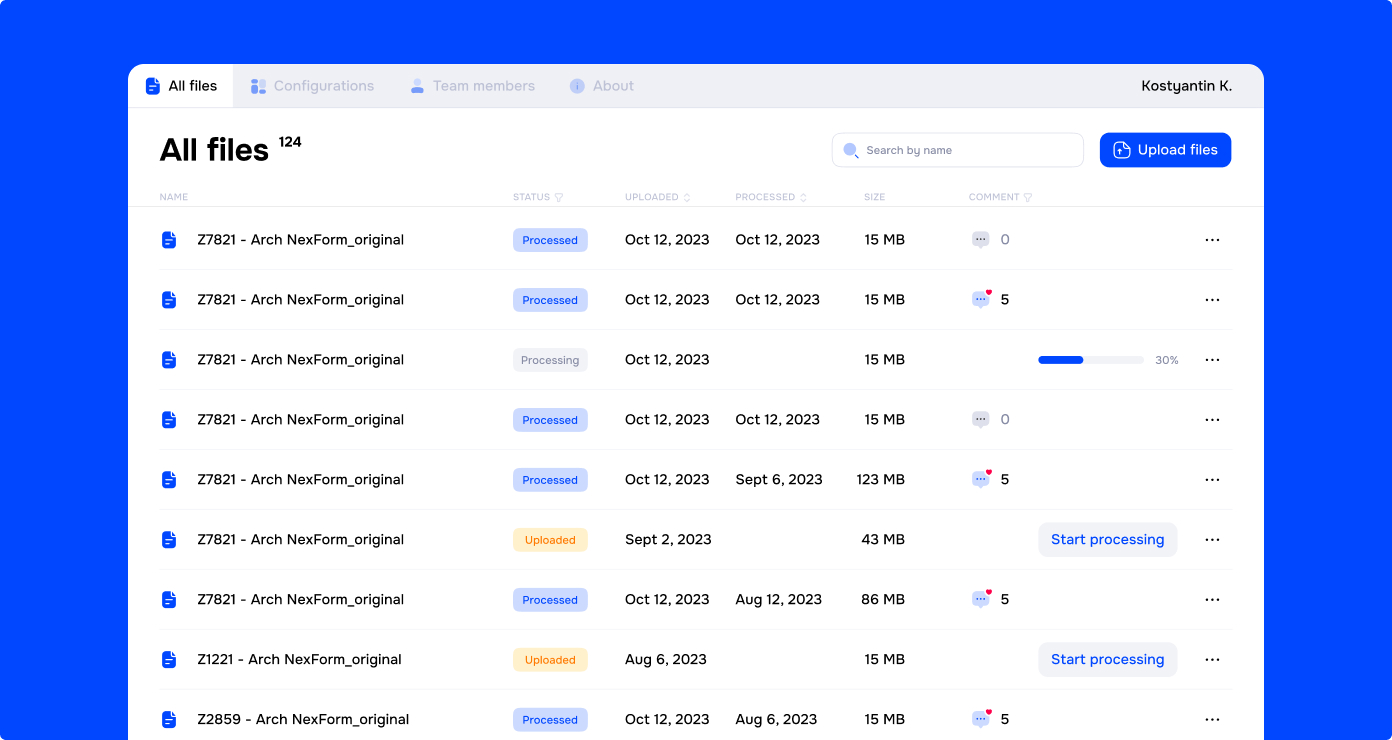
Prior to creating the ML model, it took 2 to 6 hours to complete the review process for estimation team. They were manually opening large PDFs and estimate the amount of objects that manufacturing company needs to produce. With the ML model in place, the review process now takes less than 10 minutes.
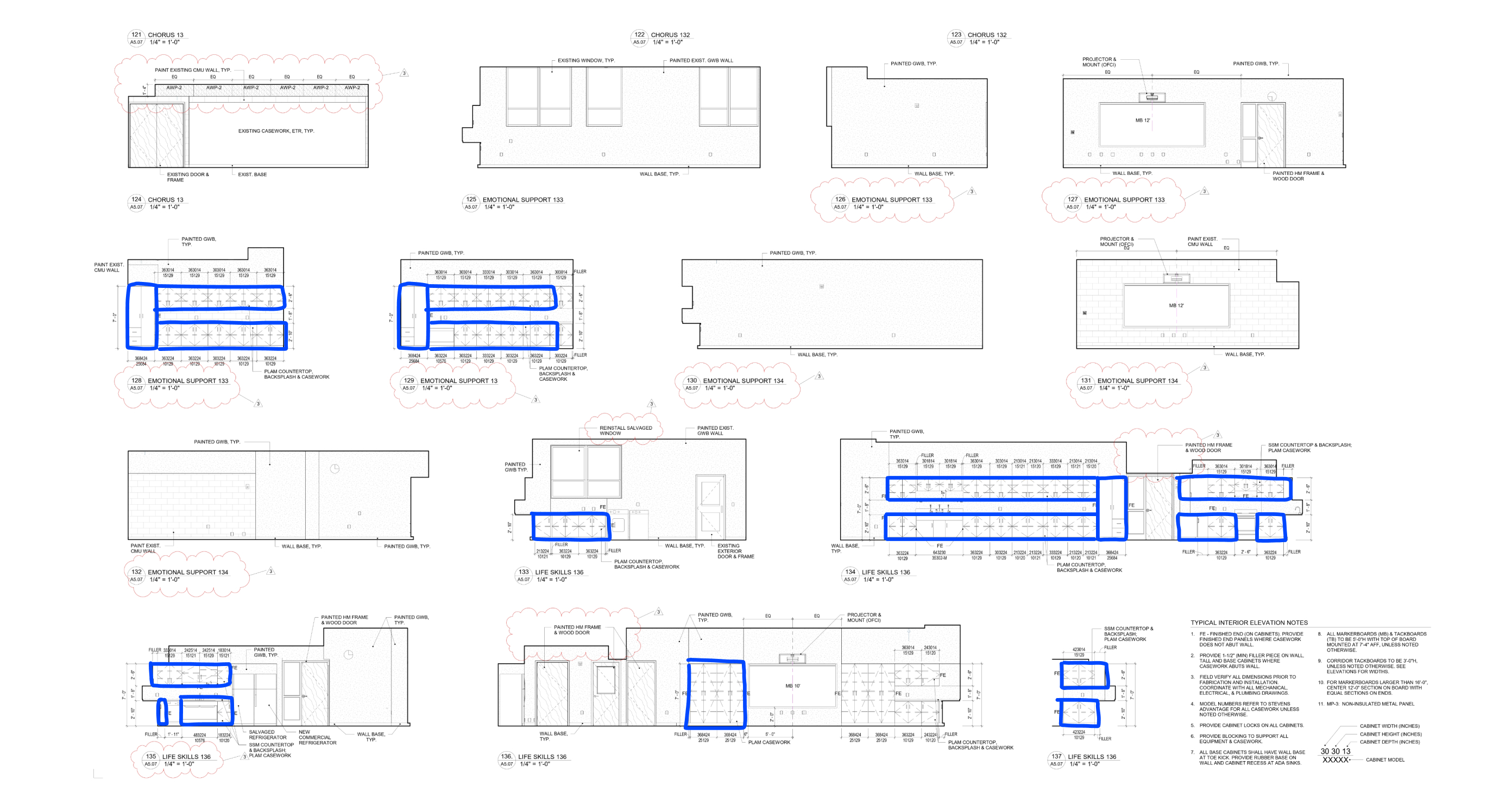
The platform is centered around a streamlined core flow: users upload complex architectural PDFs and receive automated estimations.
Beyond simple detection, we integrated an interactive AI Agent that allows users to query documents directly—finding specific product details or verifying requirements instantly.
The interface simplifies the critical first step of bid preparation, turning static files into structured, actionable data.
Key Features:
Interactive AI Chat: Instant Q&A for verifying specs and retrieving product details.
Smart Configuration: Custom keywords and categories to tailor detection to specific workflows.
Continuous Learning: User feedback loop that refines model accuracy over time.
Structured Exports: Auto-generated CSV and PDF summaries for easy inventory integration.
In the pre-discovery phase, extensive studies and experiments were conducted to ensure the project could be successfully implemented and deliver the desired results.
Before signing the contract, over 50 hours were spent on the evaluation and research phase, pre-testing and double-checking everything — from the available CV solutions to studying the specifics of manufacturing industry paperwork and company’s software.

When the project was deemed viable, the kickoff included a 3-hour work session with company’s experts to understand every nuance of the quote generation workflow. With a comprehensive understanding of the challenge, the technical work began.
One hurdle emerged immediately: the sheer size and complexity of the architectural drawings. Direct processing of these images would overwhelm conventional machine-learning models.
A combination of image detection and pre-processing techniques was employed:
.jpg)
A pivotal moment occurred when the system successfully identified the first complex object, marking a significant breakthrough.

Once the results of the proof of concept were viable, our team moved to the design stage.
The prototype is centered around the core flow: upload the PDF and get an estimation. The interface simplifies the first critical step, allowing users to quickly submit documents for processing.
.jpg)
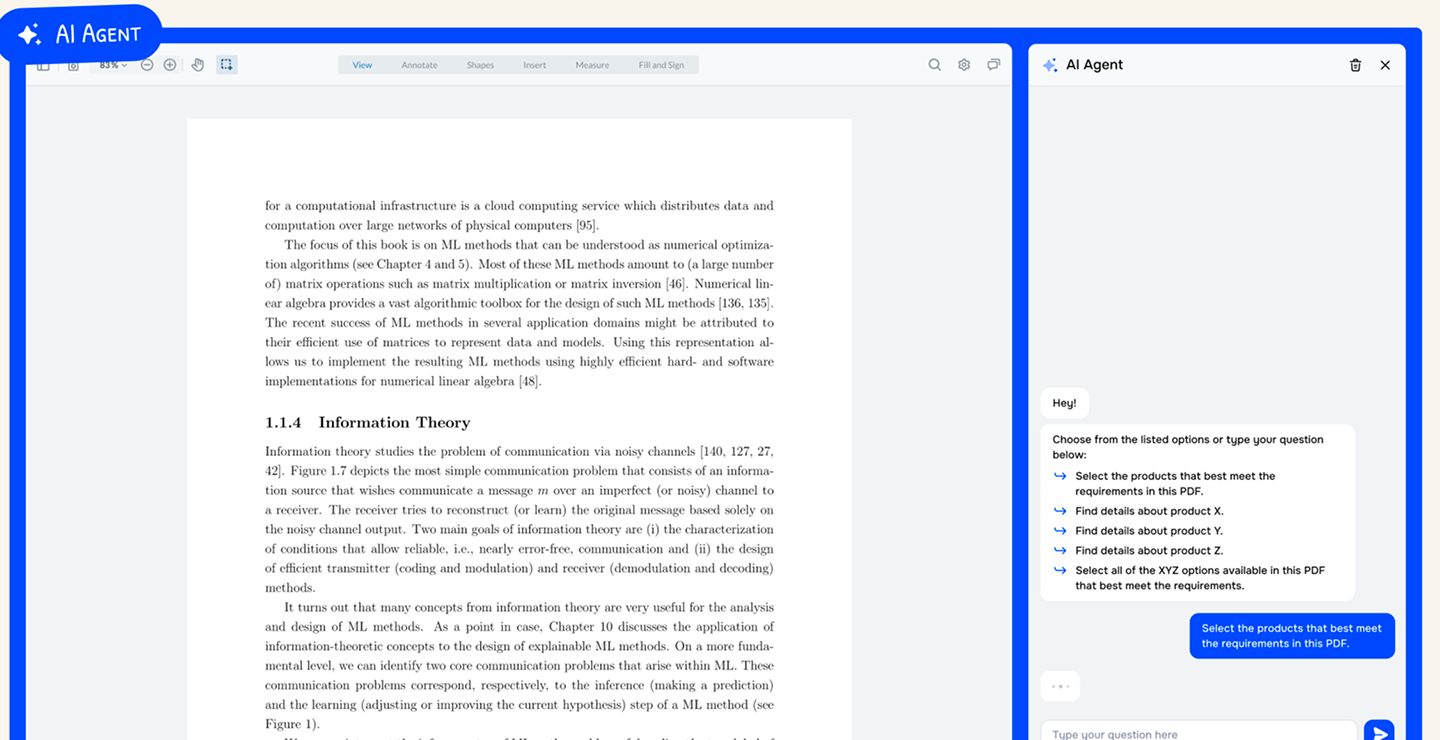
Once analyzed, the system generates structured summaries highlighting all identified objects. This structured format enables seamless extraction for inventory planning and production scaling.
.jpg)
We added a simple configuration tab so users can control what the AI focuses on. By specifying target objects and keywords, they can tailor the system to detect precisely the manufacturing elements required for their workflow.
.jpg)
.jpg)
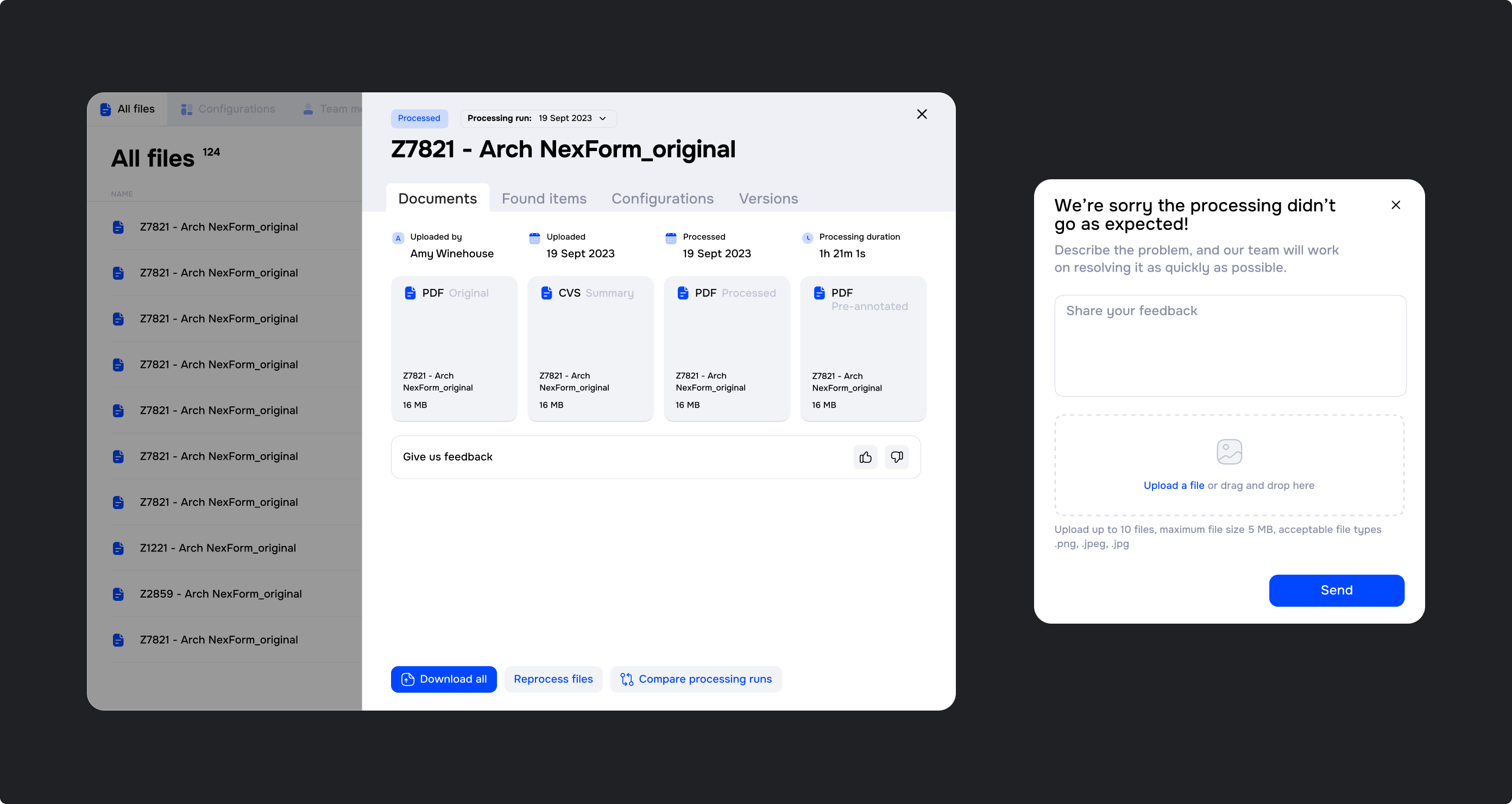
The system continually evolves through direct user input. Estimators can mark detected objects as correct or incorrect using simple correction tools during their review process. These corrections feed back into the system, helping refine its pattern recognition and improve accuracy over time.
This creates a powerful feedback loop where the AI gets smarter with every use, ensuring ongoing improvements in detection and extraction. By focusing enhancements on the most relevant areas, the system continues to align more precisely with business needs.
The team is adding more objects for the AI to recognize and building direct connections to the Stevens database SKUs.
This AI investment is just beginning to show its power. The early wins point to transformative results ahead as we continue our partnership.
.jpg)