
AI
AI moved the capability line. The accountability line stayed where it was.
By Zhenia Mohyla2 min read
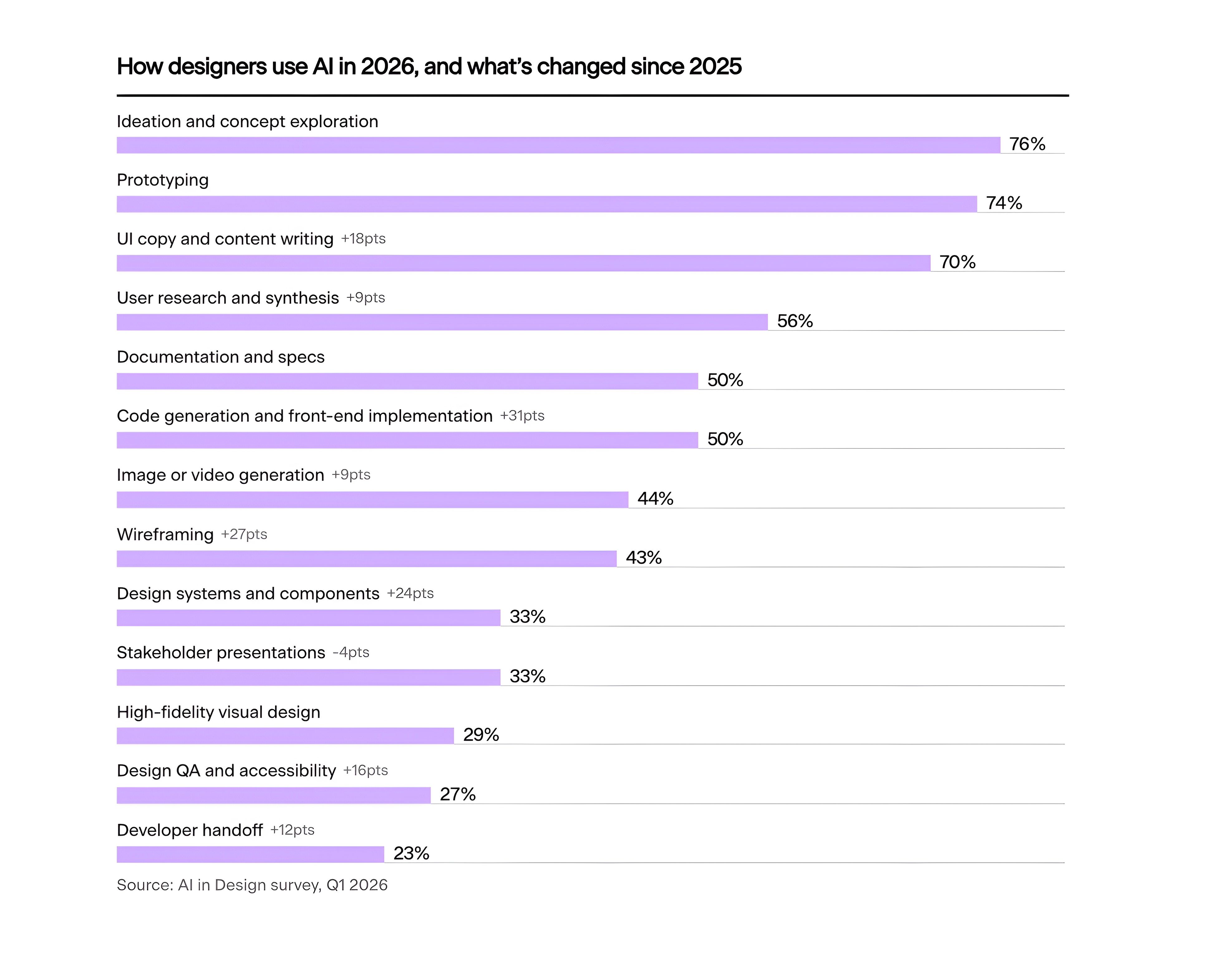
The biggest jump in how designers use AI this year isn't design. It's code.
+31 points year over year. The largest move in the AI in Design 2026 report. Half of designers surveyed have shipped AI-generated code to production.
I'm one of them. With a caveat.
On client sites every change still goes through a developer
I learned to ship on our own website instead. It looks polished from the front. The code behind it is a mess. That's what a sandbox is for 😅
Here's what shipping it myself changed
Numbers from two similar pages, one year apart.
Our hiring page, last year
- 10h design (a second designer)
- 4h my copy
- 70h development + QA
84 hours. Three people. Weeks of revisions.
Our newest page, with an interactive game on it
- 4h copy
- 12h design + code + QA
16 hours. One person. Zero developer minutes.
To be fair, the old page was the heavier build. So the real multiplier is 3-4x. I wanted to write 10x. Couldn't.
But the multiplier matters less than these two numbers
- 70 → 0. The entire handoff (developer, QA, revision ping-pong) gone from this class of work.
- 4 → 16. I used to be 5% of a page. Now I'm 100% of it. My attention became the limit.
And a new thing appeared: pages nobody would approve at 84 hours now exist at 16. With no meeting.
One question left
If I can ship, why do I still keep developers between me and client production? Max, my co-founder, answered it for me:
You can write the code now, but you can't be responsible for it staying alive.
AI moved the capability line. The accountability line stayed where it was. So our rule: designers ship to staging. Developers own production.
We're still writing these rules as we go. I suspect that's true of everyone posting about AI workflows. They're just not saying it ᕕ( ᐛ )ᕗ
See more Norml in Google Search
Add Norml as a preferred sourceShare this article