Max Tymoshyn, founder of Norml Studio
Max TymoshynFounder, Norml Studio

A fintech web design agency for platforms that have to look institutional.

Norml designs and builds the websites of financial platforms — the architecture, the design system, and the build. For teams whose buyers are carriers, institutions and partners, in a market where looking newer than you are costs you the deal.

A few clients we’ve worked with

99Legal / Kremenchuker Law GroupAstraZenecaCoxitDiet vs DiseaseFlorida seal — Regional Counsel projectMetroplex HomebuyersNasdaq Private MarketOffice of Criminal Conflict and Civil Regional Counsel, Second Region of Florida — Ita M. NeymotinPolaclubThe Farm Soho

In finance the website is a credibility test, and most fail it early.

  • The product is real, funded and in production, and the site makes the company look like it is still deciding what to build.

  • Carriers, agencies and individual users all need a different explanation, and the site gives them one shared page.

  • Nobody inside the company describes the product the same way twice, because there is no shared language to describe it with.

  • Trust has to come from how the platform explains itself, because founder stories do not carry weight with a regulated buyer.

  • There is real data worth publishing, and no system capable of putting it on the public web at scale.

What our fintech web design services include.

Seven things, in the order we do them. Web design for fintech starts with the audiences you actually sell to and the data you actually hold; Norml can take the whole scope or work beside your product and engineering teams.

Stakeholder alignment

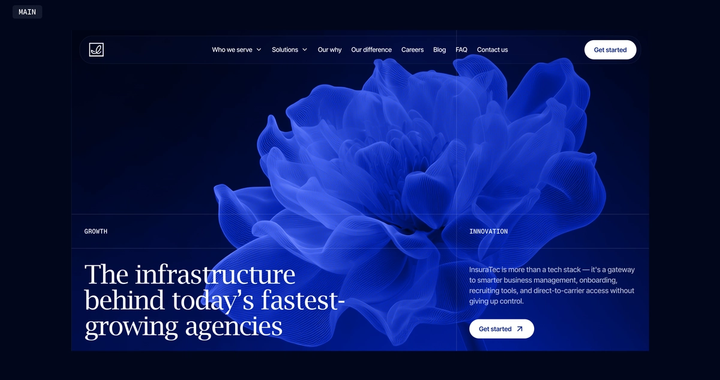
Before the site, the shared language. For InsuraTec we ran alignment workshops that produced the documentation the whole company could describe the product from — because the teams had each been describing it differently.


Information architecture

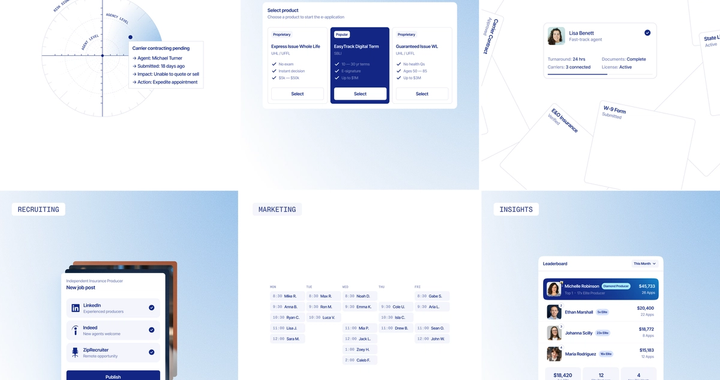
Which pages exist and what each one has to prove, split by who is reading. InsuraTec needed distinct product and service pages for carriers, IMOs, agencies and solo agents, each with its own explanation.

Design system in Figma

Components, states and responsive rules. For InsuraTec the system was built on a modular structure that mirrored how the product itself is assembled, so layout and hierarchy signalled technical maturity without having to claim it.

Financial data display

Pages that make complex figures scannable. For Nasdaq Private Market we designed the company page format that presents private-market financial data clearly, plus the directory navigation and search around it.

Programmatic pages at scale

When the data is the product, the pages have to generate themselves. With Nasdaq’s team we engineered the pipelines from their dataset and the architecture that creates thousands of company pages and integrates with the existing marketing site.

Lead funnels per audience

A carrier and a solo agent do not convert on the same page or the same offer. We build the funnel per audience profile and partnership type, not one form for everyone.

Build, integration and handoff

WordPress, a headless front end, or custom infrastructure where the job needs it — integrated with what you already run, and editable by your team rather than dependent on us.

Fintech web design deliverables.

The exact scope depends on the product and how many audiences it serves. A typical fintech engagement hands over the following:

  1. 01

    Shared product documentation and messaging your whole team can work from.

  2. 02

    A page map you can hand to anyone — every URL, its job, and which audience it serves.

  3. 03

    A Figma design system with components, states and responsive rules.

  4. 04

    Page templates per audience, with the funnel each one actually converts on.

  5. 05

    A built site, or the directory and data pipelines where the data is the product.

  6. 06

    Analytics and Search Console configured on day one, not after launch.

  7. 07

    A handoff session and the files, so nothing about the site depends on us staying.

Our process

How our fintech web design process works.

Discovery

We read the product, the analytics and the sales conversations, and we get your stakeholders describing it the same way. You get the diagnosis — which audience stalls where and why.

[ 01 ]

Architecture

Page map, URL structure and what each page has to prove for each audience. A sitemap you can argue with before anything is designed.

[ 02 ]

Design

Wireframes first, then the system in Figma. Components and states, not a stack of static screens.

[ 03 ]

Build

The site, and where the data is the product, the pipelines and generation behind it. Editable by your team.

[ 04 ]

Launch

Redirects, analytics, Search Console, speed. Where a hard external date exists, the scope is cut deliberately so the first release lands on it.

[ 05 ]

Fintech web design questions.

What does a fintech web design agency do differently?
Two things. The buyer is usually institutional and conservative, so credibility has to come from how the product explains itself rather than from branding energy or a founder story. And the company usually sells to several very different audiences at once, which means one page for everyone quietly fails all of them. Whether you are hiring a fintech web design firm, a fintech web design company or an agency, those two constraints are the work.
We sell to several different types of customer. How do you handle that?
With a page and a funnel per audience, built from one design system. InsuraTec sells to carriers, IMOs, agencies and solo agents — four groups with different needs and different vocabulary — so we built product and service pages for each, with lead funnels customised per audience profile and partnership type, instead of forcing them through a shared page.
We have a large dataset. Can you publish it on the public web?
Yes, and it is a specific kind of engineering rather than a design decision. Nasdaq Private Market held unique data on private companies and wanted part of it publicly accessible. We designed the company page format and the directory interface, then engineered the data pipelines with their team and the programmatic architecture that generates thousands of pages and integrates with their existing marketing site.
Can this actually change our traffic, or is it just presentation?
Both, when the data supports it. Nasdaq Private Market’s marketing site was receiving around 300 visitors a month before the directory; afterwards the system was serving traffic several orders of magnitude larger. That result came from publishing a genuinely useful dataset at scale, not from design alone — if you do not have data like that, expect the site to change how you are evaluated rather than how many people arrive.
We have a conference or launch date. Can you work to it?
Yes, by cutting the scope deliberately rather than rushing all of it. InsuraTec had a major industry conference in Orlando two months out, so design and development ran in parallel to deliver the homepage and brand visuals for the conference, then the full site rolled out afterwards with weekly updates. Nasdaq’s directory was 3 to 4 months end to end while their core platform kept operating.
Who is responsible for compliance and disclosures?
Your team stays the authority on every claim, figure and disclosure — we are a design and engineering studio, not a compliance advisor. What we do is structure the site and the publishing workflow so those reviews are part of it rather than an afterthought, and so a page cannot go live without passing through them.
Do you work with insurance and insurtech specifically?
Yes. InsuraTec builds modular infrastructure for the US insurance market — software and partnership programmes for carriers, agencies and solo agents — and we did their positioning, brand system and website. Insurance sits close enough to the rest of financial services that the method is the same: align the language, split by audience, then build.
How much does fintech web design cost?
Norml publishes its rates on Clutch — $50–$99 per hour with a $5,000 project minimum. Full fintech web design services, meaning alignment, architecture, design system and build, sit well above that minimum. A directory or data-pipeline build is scoped separately. We scope after discovery, not before.
What happens after launch?
You can run it yourself — the handoff includes the files, the system and a session with your team. When a team would rather not, Norml Care covers updates, monitoring and small changes on a monthly plan.
Website 2.0 combines strategy, design, development and launch in one engagement — the same process behind Nasdaq Private Market and InsuraTec.

Building or rebuilding a fintech website?

See Website 2.0