Max Tymoshyn, founder of Norml Studio
Max TymoshynFounder, Norml Studio

Real estate web design built around the lead, not the listing.

Norml designs and builds websites and platforms for property investors, brokerages and multi-service operators. The architecture, the design system, the build, and the capture and routing behind every enquiry, so a lead reaches the right person before it goes cold.

A few clients we’ve worked with

99Legal / Kremenchuker Law GroupAstraZenecaCoxitDiet vs DiseaseFlorida seal — Regional Counsel projectMetroplex HomebuyersNasdaq Private MarketOffice of Criminal Conflict and Civil Regional Counsel, Second Region of Florida — Ita M. NeymotinPolaclubThe Farm Soho

In property the website is rarely the problem. What happens after the form is.

  • Forms sit disconnected from the CRM, so somebody retypes every enquiry by hand before anyone can follow up.

  • Leads arrive from search, paid ads and referrals with no coordination, and nobody can say which source is worth the spend.

  • Manual routing eats hours a day, and as volume rises follow-up slows down exactly when speed matters most.

  • The business runs several service lines, and the same offer is called three different names across the site.

  • Conversions are not tracked per service, so advertising has no real signal to optimise against.

What our real estate web design services include.

Seven things, in the order we do them. Web design for real estate starts with the enquiry you actually get and where it currently stalls; Norml can take the whole scope or work beside your marketing and sales teams.

Service and product structure

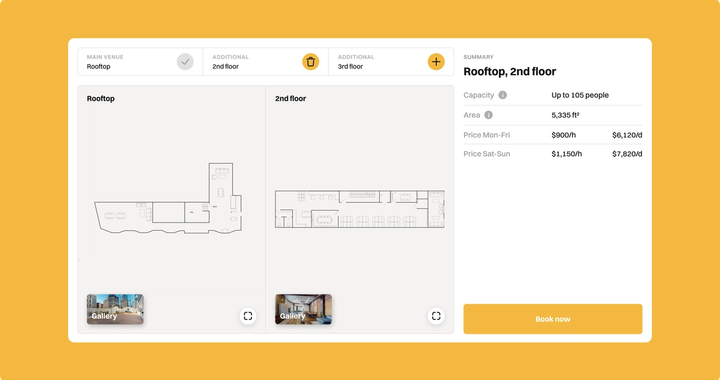
Defining what the business offers and naming it once. The Farm Soho runs five lines — co-working, event spaces, long-term leasing, turnkey offices and virtual mailboxes — and we mapped and standardised all five before touching the design.

Information architecture

Which pages exist, what each one has to prove, and the route from a search to an enquiry. Dedicated pages per service rather than one page trying to serve every audience.

Design system in Figma

Components, states and responsive rules, so a new service or location page looks like the rest without a designer being involved.

Lead capture that reduces friction

For Metroplex Homebuyers we built conditional forms that adapt to the property type and the seller’s situation, pre-filled from the Zillow API, plus a "what is my house worth" calculator that engages a visitor and qualifies them at the same time.

CRM routing and follow-up

Every enquiry into the CRM with the right tags and owner, immediate notification, then staged email and SMS sequences. Metroplex ran on Zoho; we wire to whatever you already use.

Custom platforms where a site is not enough

DoorKnockPro needed field teams to draw zones on a map, filter thousands of properties, generate an optimised driving route into Google Maps, and track QR-coded door hangers straight back into the CRM. That is software, not a website, and we build it.

Analytics and SEO

Conversion tracked per service so campaigns have real data, and the technical and content work to earn the traffic. For The Farm Soho we built the tracking layer, connected it to Google Ads for the first time, and produced a location-page system of 500-plus pages a content editor manages without code.

Real estate web design deliverables.

The exact scope depends on how many service lines and lead sources are in play. A typical engagement hands over the following:

  1. 01

    A defined service line with standardised names and a clear hierarchy.

  2. 02

    A page map you can hand to anyone — every URL, its job, and which service it serves.

  3. 03

    A Figma design system with components, states and responsive rules.

  4. 04

    Enquiry forms and calculators wired to your CRM with routing and follow-up.

  5. 05

    A built site, or a custom platform where the work is operational rather than marketing.

  6. 06

    Conversion tracking per service, connected to your ad accounts.

  7. 07

    A handoff session and the files, so nothing about the site depends on us staying.

Our process

How our real estate web design process works.

Discovery

We read the analytics, the ad accounts and the CRM, and we follow one real enquiry end to end. You get the diagnosis — where the lead stalls and what it costs.

[ 01 ]

Architecture

Service structure, page map and URL plan. A sitemap you can argue with before anything is designed.

[ 02 ]

Design

Wireframes first, then the system in Figma. Service and enquiry templates, not a stack of static screens.

[ 03 ]

Build

The site, then the capture, routing and follow-up behind it. Editable by your team without a developer.

[ 04 ]

Launch

Redirects, analytics, Search Console, speed, and conversion tracking live per service from day one.

[ 05 ]

Real estate web design questions.

What does a real estate web design agency actually improve?
Usually the part after the form, not the form. Most property businesses already get enquiries; what costs them deals is that the enquiry lands in an inbox, gets retyped into a CRM by hand, and reaches the right person hours later. So the work is architecture and lead infrastructure as much as design. Whether a firm calls itself a real estate web design company or an agency, that is where the money is.
Do you build MLS or IDX listing feeds?
It is not what we specialise in, and we will say so rather than learn it on your budget. Our property work has been investor-side and operator-side: buying homes directly from owners, field acquisition campaigns, and multi-service commercial operators. If a standard agent listing site with an IDX feed is what you need, a listings-platform vendor will serve you better and cost less.
Do you do commercial real estate web design?
Yes. The Farm Soho is a New York co-working brand with locations across Manhattan and five distinct service lines, from event spaces to long-term leasing to virtual mailboxes. Commercial work usually has more audiences and more internal confusion about what is being sold, which makes the structure work bigger and the design work no different.
Can you connect the site to our CRM?
Yes, and it is normally the highest-return part of the job. Metroplex Homebuyers had forms operating separately from their CRM, with manual routing taking hours daily and some leads going unaddressed as volume grew. We connected capture straight through to Zoho with tagging and assignment, immediate notification, and staged email and SMS sequences, plus dashboards to find where the funnel drops.
We need more than a website. Do you build software?
Yes. DoorKnockPro had extensive property data — foreclosure status, distress level, timing, specs — and no way to turn it into field campaigns. We built a map-based platform where teams draw custom zones, filter by multiple parameters, generate an optimised route that opens in Google Maps, and track door-hanger QR scans through to CRM follow-up.
Can you get us ranking for locations without building junk pages?
Only where the demand is real. For The Farm Soho we built a location content system on Airtable that a content editor manages without touching code, which produced 500-plus indexed pages for a business that genuinely operates across many locations and service combinations. Generating location pages where nobody is searching does not rank and can drag the rest of the site down, so we check the demand first.
Our site is old and every change takes forever. Is a rebuild the answer?
Often, and it is worth pricing the delay you are already paying. The Farm Soho’s codebase had accumulated a decade of changes with no refactoring, so any update to text, layout or function took disproportionate development time. We refactored it in parallel with the redesign and put a proper git workflow, QA, CI/CD and a staging environment behind it, so later changes stopped cascading into errors.
How much does real estate web design cost?
Norml publishes its rates on Clutch — $50–$99 per hour with a $5,000 project minimum. Full real estate web design services, meaning service structure, design system, build and lead infrastructure, sit well above that minimum, and a custom platform is scoped separately. We scope after discovery, not before.
What happens after launch?
You can run it yourself — the handoff includes the files, the system and a session with your team. When a team would rather not, Norml Care covers updates, monitoring and small changes on a monthly plan.
Website 2.0 combines strategy, design, development and launch in one engagement — the same process behind DoorKnockPro, Metroplex Homebuyers and The Farm Soho.

Building or rebuilding a property website?

See Website 2.0