What our insurance web design services include.
Seven things, in the order we do them. Website design for insurance agencies is mostly about the path from a search to a workable quote request — the visual work matters, but it is not where the leads are lost.
A page per line of business
Commercial, personal, life, health, benefits — and inside commercial, a page per trade you actually want. Separate pages, because a buyer with a specific need will not recognise themselves in a combined one, and because combined pages compete with each other in search instead of each ranking for its own thing.
A quote form that qualifies
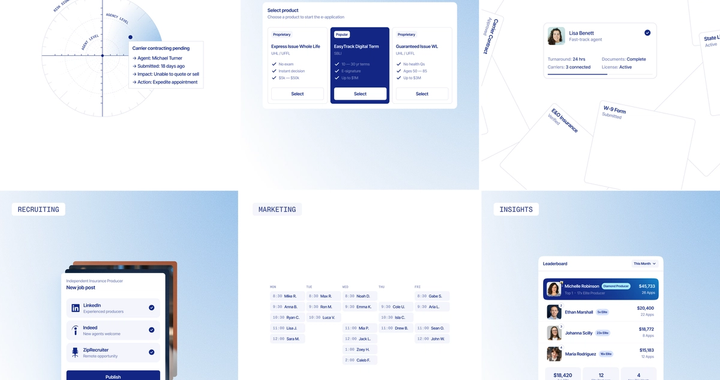
Conditional questions that adapt to the coverage described, so what reaches a producer is workable rather than a name and a number. We built exactly that pattern for Metroplex Homebuyers — forms adapting to the situation, routed into the CRM with the right owner, immediate notification, and staged follow-up by email and text.
Routing into your agency management system
Straight into AMS360, Applied Epic, HubSpot or whatever you run, with the right producer, tags and an immediate notification. No retyping, no Friday enquiry sitting until Monday.
Saying what the agency is, not which carriers it sells
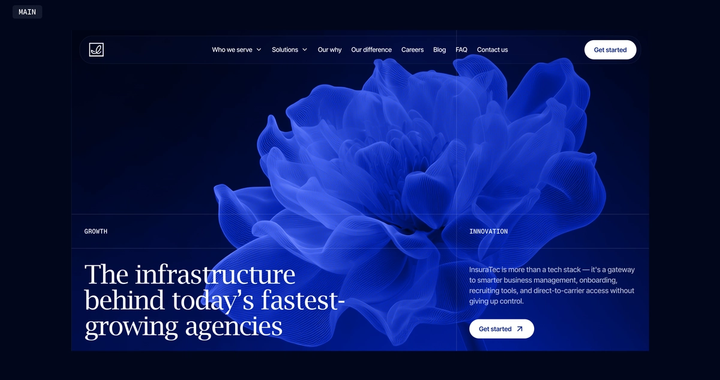
Most agency sites are a carrier logo wall, which tells a buyer nothing and describes every competitor equally. For InsuraTec the engagement started with positioning for exactly this reason, and the website was built from it rather than the other way round.
Design system in Figma
Components, states and responsive rules, so the tenth coverage page looks like the first and a new line of business does not need a designer.
A build your marketing person can run
WordPress your team edits without a developer, including the producer directory and location pages where you genuinely have offices.
Analytics and search
Conversion tracked per line of business, so you can finally see which coverage the marketing is buying, plus the technical and content SEO to earn the traffic. For The Farm Soho the same discipline produced a content system of 500-plus indexed pages an editor manages without touching code.