Engineering
Why AI can save marketers time and still leave them with more work
By Max Tymoshyn4 min read
Cut to the chase
AI makes research and first drafts much faster, but it doesn't shrink a marketing team's workload. Every new lead and every new page still needs a person to decide, add context and check, so the work moves to review.
What a marketing lead told me about AI and her workload
In July I talked to a marketing lead about how her work had changed since her team started using Claude. I expected her to say there was less of it. She said the opposite: there was more work than a year earlier.
AI wasn't failing her. Her team could now do things they hadn't had the capacity to do before, so they took them on. Here's what changed in three parts of her job.
| What changed | Before | With AI | Her workload |
|---|---|---|---|
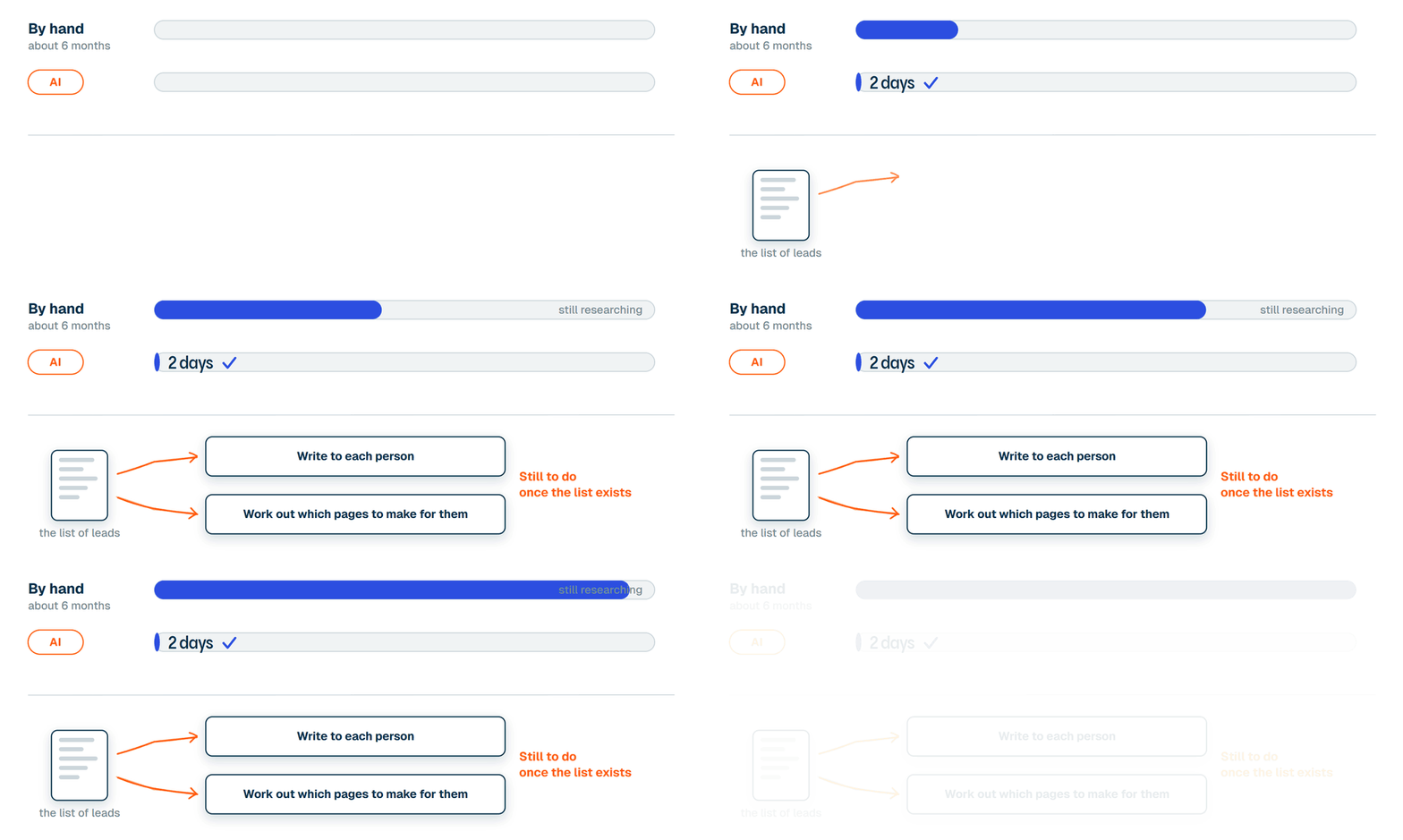
| Researching a pool of leads | About 6 months by hand | 2 days | More: every lead needs follow-up |
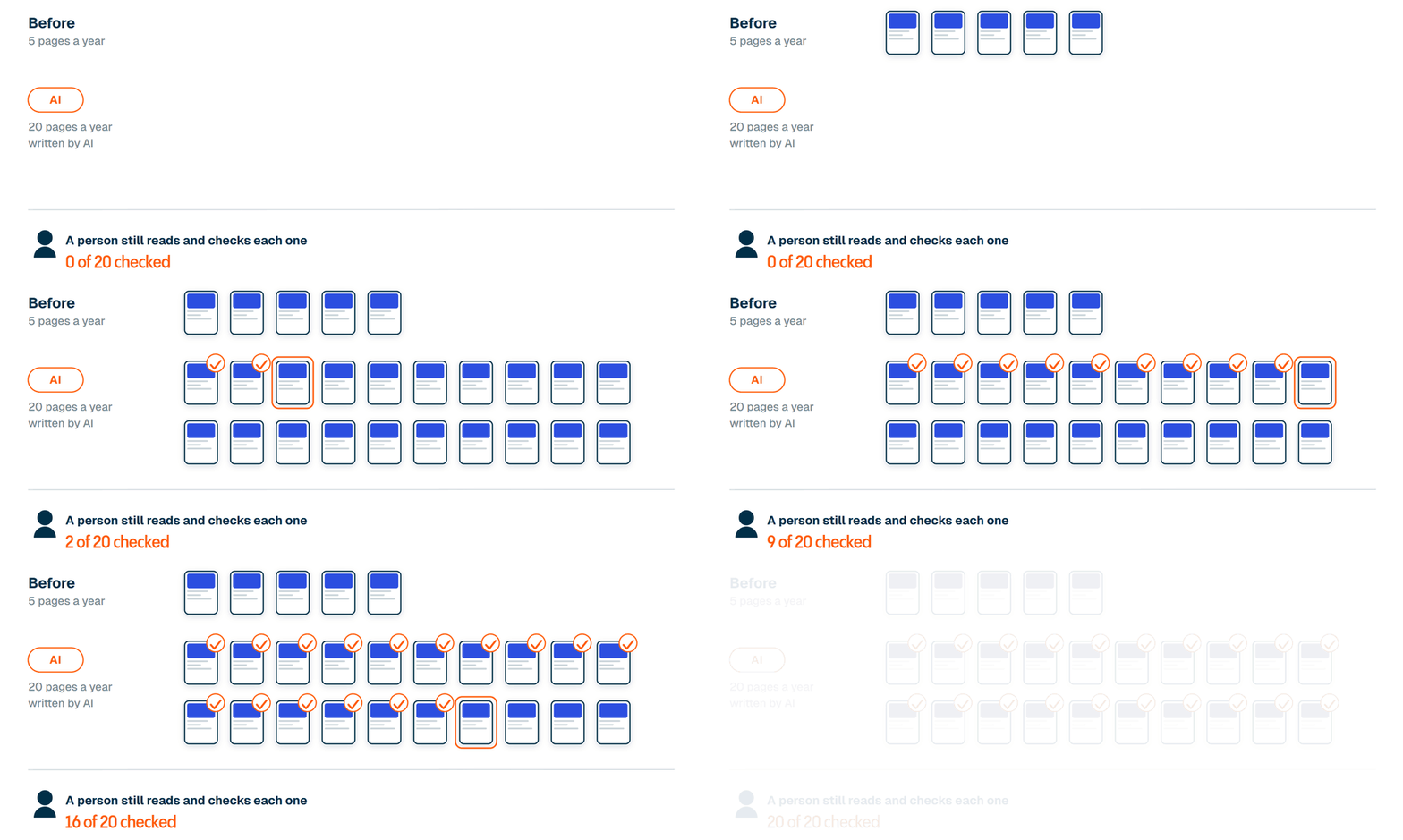
| Website pages | 5 a year | 20 a year | More: every page needs review |
| Sales decks | A custom deck for every prospect | The CEO makes his own | Less |
Two of the three changes added work for her team. Only the decks took work off her plate.
Lead research: six months of work done in two days
Her team recently researched a pool of potential leads in two days. She said finding and selecting those people by hand, with the tools they used before, would have taken about six months.
The list was only the start. Once they had it, the team still had to:
- Write to each person on the list.
- Work out which pages to make for those people.
More information gave the team more ways to approach potential customers, and every one of those approaches needed someone to do it.
Sales decks: the one job AI took off her plate
One change did make her job lighter. Her CEO learned to make presentations himself, so she no longer had to build a custom deck for every prospective client.
It was the one example she gave of AI making her work easier. The other two changes gave her team more to do.
Website pages: twenty a year instead of five
Pages were her other example. Her team could now make twenty pages a year instead of five. AI could write them, but the rest of the work on each page stayed with her:
| On every page | Who does it |
|---|---|
| Writing the draft | AI |
| Deciding what belongs on the page | The marketer |
| Giving the text the context it needs | The marketer |
| Reading it through and checking it before it goes live | The marketer |
I put it back to her: more work was entering the pipeline, so the expectation became that more would get done in the same time. She agreed.
Twenty pages instead of five means four times as many pages to review.
Why marketers don't want to edit the website's design and code
We also talked about letting a marketer change the website directly with Claude. She was fine with small edits. Her concern was what happens as the changes get bigger and the roles of marketer, designer and developer start to mix.
| The change | Would she take it on? | Why |
|---|---|---|
| Changing text inside the existing design | Yes | She knows what the page should say |
| Bigger changes to the design | No | She doesn't have a designer's eye to catch the rest, and the site drifts from its design system |
| Fixing what breaks | No | That's a developer's expertise, and she doesn't want to fix it |
| Deciding what to change after launch | No | Someone has to watch how people use the site |
Her line was the text. Everything past it needed a designer or a developer.
I know the drift she means. When I need an offer or a page out quickly, I publish it as it comes out and hand it to our designers and developers to clean up afterwards. It goes live fast because someone else finishes the work.
She was clear she wouldn't take the whole process on herself. She didn't have the time.
Why the whole team needs the same AI instructions
For our projects we write instructions for Claude, so anyone making a change works inside the same setup. They cover:
- How the site is built
- How to work on its code
- What the design should look like, plus design guidelines for AI to follow
Getting a whole team to use those instructions is the harder part. She described people making presentations in their own Claude accounts: the colours were right, but every deck still looked different. Instructions only help if everyone's AI actually works from them.
How to plan AI content work for your marketing team
If your team is about to publish more with AI, plan for the work that comes after the draft:
- Set the target from review time. Count how many pages your team can properly read and correct in a month, not how many AI can write.
- Give everyone's AI the same instructions: how the site is built, how its code works and what the design should look like.
- Decide who owns design, development and fixes. Let the marketer own the words, and keep someone responsible for the rest. One way of working we're considering: the marketing team creates pages, and we provide design, development and QA support for the parts they don't want to own.
TL;DR
- AI made research and writing faster: 2 days instead of about 6 months for leads, 20 pages a year instead of 5.
- The work moved to review. Every lead and every page still needs a person to decide, add context and check.
- Plan for it: set targets by review time, give everyone's AI the same instructions, and keep design and development with the people who own them.
I'm Max Tymoshyn, founder of Norml Studio. We design and build websites, and help teams keep them usable as their content and business change. You can see our work or follow me on Instagram for more website builds and demonstrations.
See more Norml in Google Search
Add Norml as a preferred sourceShare this article