Three readers, one source of truth
Layering the same science — summary, mechanism, evidence — serves all three without writing three competing sites.


A biotech site is read by an investor sizing the market, a pharma partner assessing the platform, and a scientist checking whether the mechanism is real. Write for one and you lose the other two. Norml designs and builds the architecture that lets all three find what they came for — we have done it for a genomics company and inside a pharmaceutical one.
A few clients we’ve worked with









Biotech website design for companies whose product is science — the platform explained to investors, partners and scientists on the same site without being flattened for any of them.
A marketing agency rewrote the platform page for clarity and removed the exact detail a partner was checking for.
The pipeline is a static image that goes out of date the day a programme advances, and updating it means opening a design file.
Publications are a list of links, so the evidence that took a decade to produce does nothing for the site.
Investors, partners and scientists all land on the same page, and it is pitched at whichever of them the last redesign had in mind.
Every page change waits on scientific review, and because review is not part of the process, nothing ever ships.
A life-science company explains the same work to investors, partners and scientists, each of whom will stop reading for a different reason.
Layering the same science — summary, mechanism, evidence — serves all three without writing three competing sites.
Working from approved material and keeping the evidence attached is what makes the site safe to show a regulator or a partner.
For a company whose product is years from market, the website is a large share of what the outside world can see.
Seven things, in the order we do them. Website design for biotech companies is mostly a translation problem: keeping the science exact while making it navigable by people who are not in the lab.
Investors, partners, scientists and candidates want different evidence about the same platform. Which pages exist, who each one is for, and where they cross. This is the decision the rest of the site inherits.
Written so a generalist can follow the mechanism and a specialist can see it is stated correctly, with the precise version always one click away rather than removed. Your scientists stay the authority on every claim — we design the page so their review is part of shipping it.
Programmes, stages, indications and modalities stored as records rather than drawn as a picture, so advancing a programme is an edit and the pipeline can be shown differently on different pages without being redrawn.
Papers, posters and datasets structured and linked to the programme they support, so the evidence appears wherever that programme is discussed. This is the same information-architecture discipline we applied at InheriNext, where genomic complexity had to stay intact while becoming navigable.
Components, states and responsive rules, including the scientific figures, so the tenth programme page looks like the first and a new publication does not need a designer.
Structured so a scientific affairs lead can add a publication or advance a programme without a developer. AstraZeneca is the extreme version of this problem — we built a scalable internal marketing platform there precisely so content could be produced at pace without engineering in the loop.
Search Console, analytics and conversion tracking configured at launch, so you can see which audience the site actually reaches, plus the technical SEO to earn the traffic.
Reviews from the companies we have built and maintained websites for.
Read every review on Clutch“We didn’t choose them to be impressed — we chose them because we knew they’d deliver high-level results with no risk. As a CTO myself, that’s exactly what I look for in a long-term partnership.”
“And, you know, the great part about the fact that you hit the goal, it's not that you had to compromise anything that you were doing, because, honestly, the end result far exceeded what we could have imagined.”
“I would just say that you deliver on quality … I just thought we clicked, and you delivered what we were looking for.”
“Norml Studio's professionalism and responsiveness were impressive.”
The scope follows the number of programmes and audiences. A typical engagement hands over the following:
A page map covering every URL, the audience it serves, and what it has to prove.
A structured pipeline and publication model — the fields each record carries.
A Figma design system with components, states, responsive rules and figure styles.
Platform, programme, publication, team and careers page templates.
A scientific review step built into the publishing workflow, not bolted on.
A build your scientific and communications team edits without a developer.
Analytics and Search Console configured from day one.
A handover session and every account and file in your name.
Our process
We read the analytics and talk to whoever fields partner and investor questions, because the questions they repeat are the pages the site is missing.
[ 01 ]Audience map, pipeline data model and URL plan, agreed in writing before anything is designed.
[ 02 ]Wireframes first, then the system in Figma. Platform, programme and publication templates, including how figures are treated.
[ 03 ]The site and the publishing workflow behind it, with scientific review as a step rather than an interruption.
[ 04 ]Redirects, analytics, Search Console, speed, then the files and the session that make you independent.
[ 05 ]No account layer between you and them. These are the Norml specialists this work runs through.
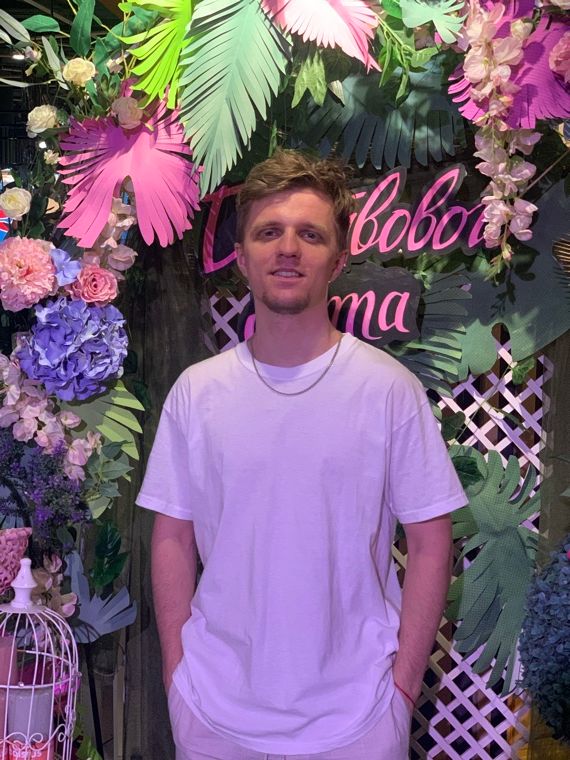
Founder & Architect
Co-founder · Design & Strategy
Full-Stack Developer

Full-Cycle SEO Specialist
QA Engineer

“I've spent 10 years working across development and marketing. I started as a developer, but design, SEO and advertising were already part of the job. That taught me to treat a website as one system: the business, the content, the design and the code have to work together. At Norml, I lead the architecture behind our work and stay involved wherever strategy, design, development and search meet.”
Max TymoshynFounder & Architect
Get started