Scope is stated before the call
Naming the work you take, the sizes you handle and the areas you serve turns the enquiry list into something worth working through.


A construction website earns nothing by looking modern. It earns by showing a developer or facilities manager that you have done their kind of work at their size, and by getting the enquiry to your estimator with enough detail to quote. Norml designs and builds the structure, the system and the site behind that.
A few clients we’ve worked with








Contractor website design built around the work you want to win: project portfolios that prove capability, service pages per trade, and an enquiry that reaches estimating as a usable brief.
Projects are shown as pictures with a caption, and nothing states the scale, the sector, the delivery method or the timeline — the four things a buyer is actually checking.
One Services page covers commercial fit-out, civil work and residential, so nobody sees themselves in it and none of the three ranks in search.
The contact form asks for a name and a message, so estimating calls every lead back just to find out the basics.
Half the enquiries are jobs you do not want, and there is nothing on the site that filters them out before they reach a human.
The site was built once, the developer moved on, and adding last month’s completed project needs an invoice.
Contractors lose more to the wrong enquiries than to too few. The website is the cheapest filter you have.
Naming the work you take, the sizes you handle and the areas you serve turns the enquiry list into something worth working through.
Documented projects answer the question a prospect is actually asking: have you built something like mine, and did it go well.
Routing a job request into the system the team already uses stops it sitting in an inbox while the prospect calls someone else.
Seven things, in the order we do them. Web design for construction companies is mostly information design: the buyer is comparing you against two other bidders and needs comparable facts, fast.
One structured record per project — sector, value band, square footage, delivery method, duration, client type — so a visitor can filter to work like theirs, and so two projects can actually be compared. Structured data is also what lets the portfolio be searched and reused across the site.
Commercial, civil, industrial, residential; general contracting, design-build, construction management. Separate pages, because a buyer with a specific job will not recognise themselves in a combined one, and because combined pages compete with each other in search instead of each ranking for its own thing.
Conditional questions that adapt to the job described — sector, scope, budget band, timeline, location — so what lands with estimating is a brief rather than a name. We built exactly that pattern for Metroplex Homebuyers, routed straight into their CRM with the right owner and immediate notification.
Licences, bonding capacity, insurance, safety record, certifications and union status, presented as structured facts rather than a logo strip. We publish what you give us and nothing more; every figure on the site stays yours to verify.
Components, states and responsive rules, so the fiftieth project page looks like the first. This matters more here than in most sectors, because the portfolio grows for years after launch.
WordPress, structured so adding a completed project is filling a form, not calling a developer. Photos, specs and sector tags go in once and appear everywhere the project is referenced.
Conversion tracked per service and sector, so you can see which work the marketing is actually buying, plus the technical and content SEO to earn the traffic. For The Farm Soho the same discipline produced a content system of 500-plus indexed pages an editor manages without touching code.
Reviews from the companies we have built and maintained websites for.
Read every review on Clutch“We didn’t choose them to be impressed — we chose them because we knew they’d deliver high-level results with no risk. As a CTO myself, that’s exactly what I look for in a long-term partnership.”
“And, you know, the great part about the fact that you hit the goal, it's not that you had to compromise anything that you were doing, because, honestly, the end result far exceeded what we could have imagined.”
“I would just say that you deliver on quality … I just thought we clicked, and you delivered what we were looking for.”
“Norml Studio's professionalism and responsiveness were impressive.”
The scope follows the number of services, sectors and projects. A typical engagement hands over the following:
A page map covering every URL, the buyer it serves, and what it has to prove.
A structured project model — the fields every project record carries.
A Figma design system with components, states and responsive rules.
Service, sector, project and careers page templates.
A conditional enquiry form routed into your CRM or estimating inbox with the right owner.
A WordPress build your office team updates without a developer.
Analytics and Search Console configured, with conversion tracked per service.
A handover session and every account and file in your name.
Our process
We read the analytics and follow one real enquiry from the search to the estimate. Not a questionnaire. You get the diagnosis — which jobs the site attracts and which it loses.
[ 01 ]Service and sector structure, the project data model, and the URL plan, agreed before anything is designed.
[ 02 ]Wireframes first, then the system in Figma. Service, sector and project templates, not a stack of static screens.
[ 03 ]The site, then the enquiry routing behind it. Editable by your office without a developer.
[ 04 ]Redirects, analytics, Search Console, speed, then the files and the session that make you independent.
[ 05 ]No account layer between you and them. These are the Norml specialists this work runs through.
Founder & Architect

Co-founder · Design & Strategy

Full-Stack Developer

Full-Cycle SEO Specialist

QA Engineer

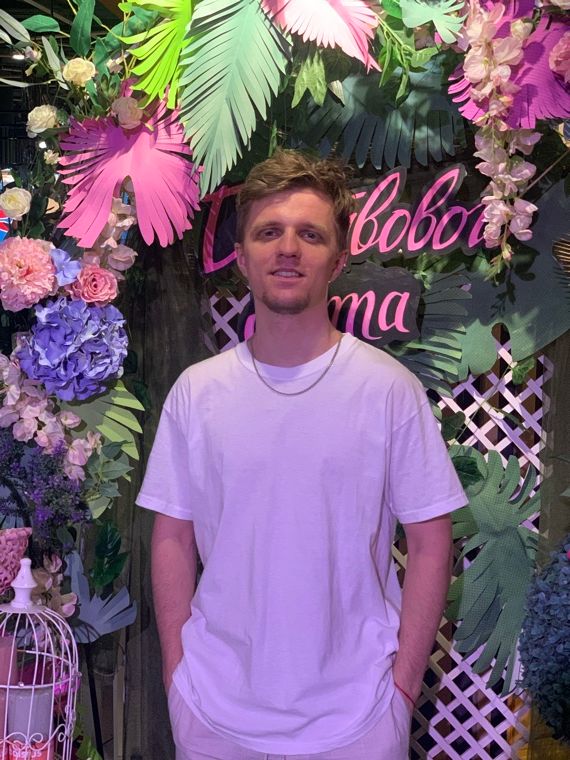
“I've spent 10 years working across development and marketing. I started as a developer, but design, SEO and advertising were already part of the job. That taught me to treat a website as one system: the business, the content, the design and the code have to work together. At Norml, I lead the architecture behind our work and stay involved wherever strategy, design, development and search meet.”
Max TymoshynFounder & Architect
Get started


